

University students share the lessons, warnings, and practical tips they wish they’d known before starting university.
Overlay

Real money lessons from over 5,000 UK students
Student Handover Report

Save early, and save consistently
With groceries, transport, course materials and more student expenses to think about, university-goers are becoming more financially savvy because they must – not because they planned to.
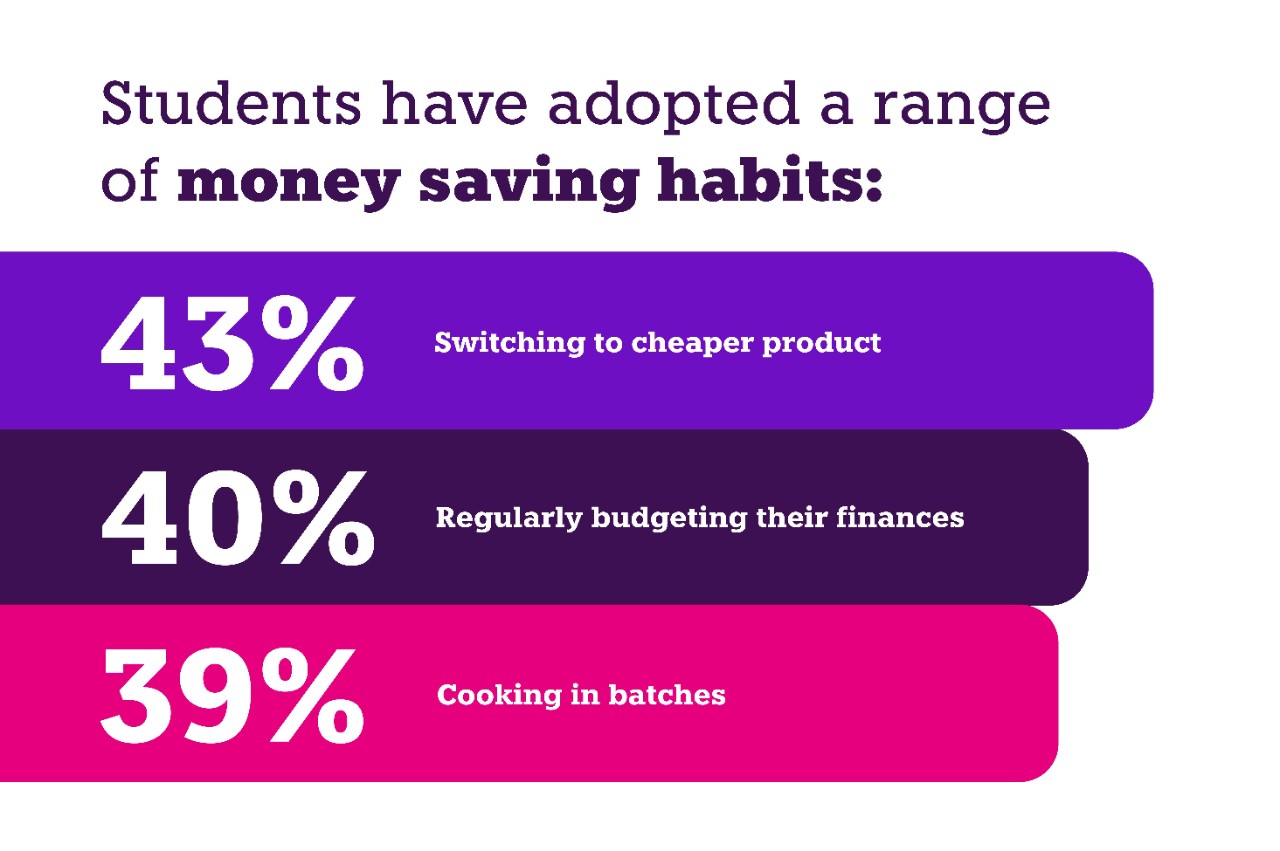
Most students (69%) entered university having saved at least something, but nearly all (98%) have since adopted new money-saving habits. These include switching to cheaper products (43%), budgeting regularly (40%), and batch cooking (39%).
The biggest surprise of university isn’t academic – 57% of students say it’s learning how much everyday life actually costs. Almost half (44%) were shocked by how quickly small purchases add up.
When it comes to tips, nearly every student (99%) says they wish they had known more about managing money before university. That includes budgeting (44%), saving (43%) and avoiding impulse buying (43%).
Don’t let social pressures drive your spending
Money worries go well beyond budgeting. University life now means juggling studying, work, finances, socialising, and wellbeing all at once.
Nearly half (45%) have picked up a job alongside their studies or a side hustle (24%) to manage student living costs. Some (43%) work more than 10 hours per week, 24% work 11-15 hours, and 14% work 16-20 hours.
This balancing act is also influencing students’ social lives. Nearly all (92%) have declined a social event because of money. Instead, students are spending time together through movie nights (47%), studying (40%), and going on park walks (37%), just to cut costs.

Be resourceful to stretch your budget
Students are using money-saving hacks to balance their budgets. Over half (52%) have sold old clothes and belongings, 28% have earned income from freelancing or side projects, and 21% have given tutoring sessions.
A growing number of students are using other ways to save money at university. Nearly half (49%) filled up a water bottle before going out and 40% cooked one big meal and ate it for days.
But there are some exceptions. Food (22%), going out with friends (15%) and gym/fitness (15%) are the top categories that students say they’d never cut from their budget.
Biggest surprise university costs revealed
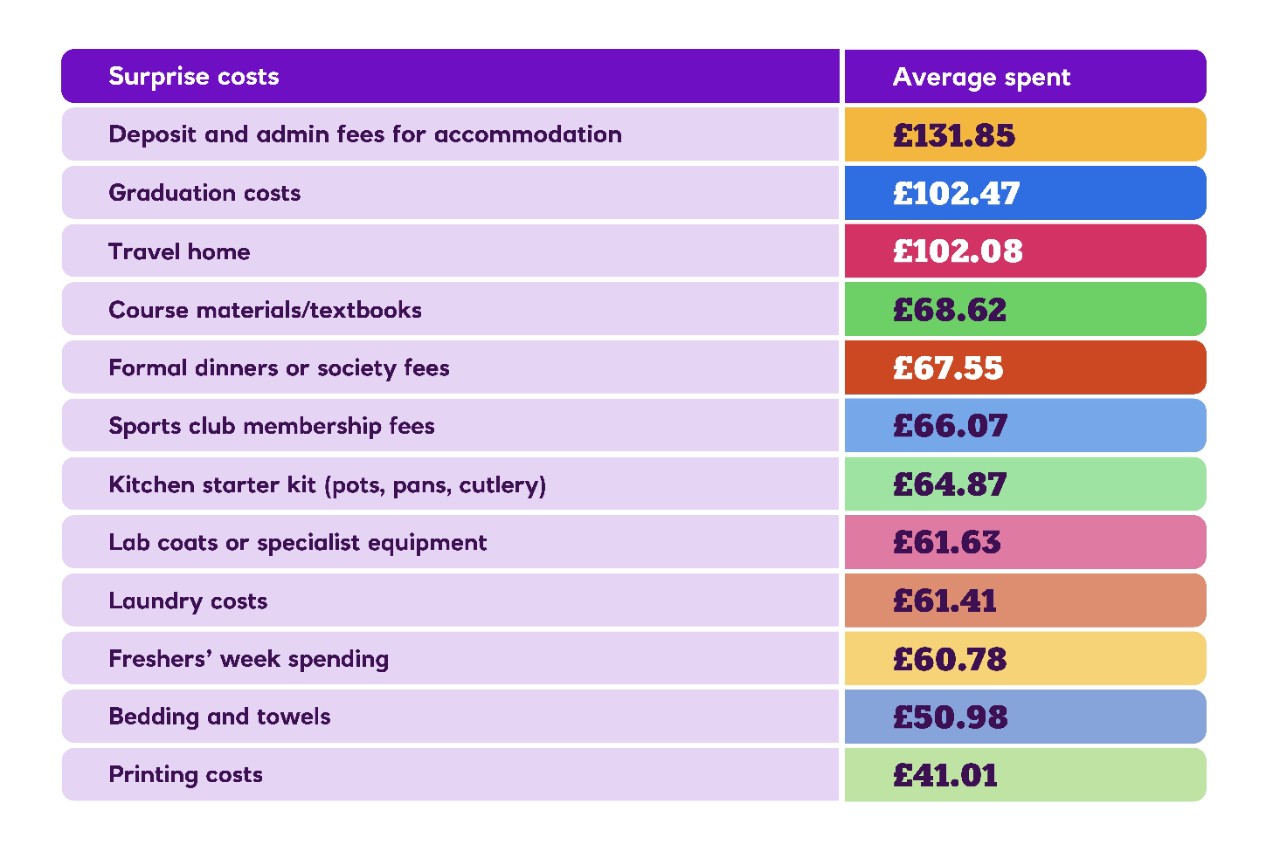
From food shopping to nights out, here are the top unexpected costs and the things students most wished they’d budgeted for before arriving at university.

Why not apply for a Student bank account?
With our Student bank account, you’ll get perks and benefits like:
- £100 cash plus a 4-year free tastecard (T&Cs apply)
- No monthly account fee
- Interest-free overdraft from year one (18+, subject to status).
Information Message
- To apply, you must be 17+ and have been living in the UK for at least 3 years. Online applications only.
- To confirm you’re a student and eligible for this account, we require your unique 16-digit UCAS code. Courses without a UCAS code are not eligible for our Student account.
- You need to be a full-time undergraduate student (on at least a 2-year course at a UK university/college) or on a nursing course lasting a year or more. You can apply within 6 months of your course start date.
- You must use your Student account as your main account by depositing student finance, wages or other regular income into it.
More help and support for students
Whether you’re a first- or third-year student, you can never have too much support during your studies. Check out our guides on all things student finances.