

Article updated April 2026
Overlay
Energy price cap
The energy price cap is the maximum amount energy suppliers can charge you for each unit of gas and electricity if you’re on a standard variable tariff.
This cap changes throughout the year and is set by Ofgem. It doesn’t limit your total bill — what you pay will still depend on how much energy you use. If you use more energy than an average household, your bills will be higher. If you use less, your bills will be lower.
You can also look at ways to reduce the energy you use and what financial support may be available.
Other government grants and schemes
Check if you're eligible for any government grants or schemes that could help cut the cost of your bills or for home improvements to save energy.
Save energy, room by room
Tips updated: April 2026
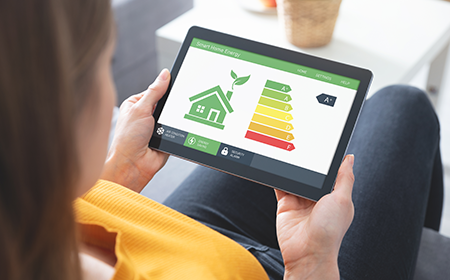
1. Learn more about your energy bill
A typical household gas or electricity bill can be confusing. Taking time to understand them better could help you to check you're not paying more than you should be. You could also try Uswitch's handy tool to check your current tariff and get more tips.
2. Adjust your thermostat by 1 degree
Setting your thermostat to the lowest temperature you feel comfortable will save you money. For many homes, that’s usually between 18°C and 21°C. If you’re able to lower your thermostat from 22°C to 21°C, you could cut your energy use and save roughly £90 a year in GB and £80 in NI.
(Energy Saving Trust, 2025)

3. Adjust your boiler’s flow temperature
Your boiler’s flow temperature sets how hot the water is when it leaves the boiler. If you have a combi boiler, you may be able to lower it to around 50–55°C in milder weather to improve efficiency. An engineer can also install controls that adjust it automatically.
(Energy Saving Trust, 2025)
Home energy and other ideas
Related articles

Visit our Home Energy Hub
See our zero cost energy saving tips and get a free Home Energy Plan for your home.