

In this article
Overlay

Simple changes to save energy
Let’s start with the very simple. If you’re studying or working from home, move your desk or chair to the window. The natural light is better for your mood and is a perfect place to stare into space while coming up with those lightbulb moments (without the lightbulb).
While LED lightbulbs might cost a bit more to buy, they’ll save you money in the long term by lasting a lot longer than incandescent or halogen ones. Using them in your home could save around £45 a year in Great Britain and £55 a year in Northern Ireland, according to Energy Saving Trust (June 2026).
Tips to reduce your energy usage
When energy prices go up, every saving counts. The good news? If you’re renting, there are simple ways to cut energy costs — no major changes and no tricky chats with your landlord required.

Don’t blast your heating
Lower your thermostat a degree to two. You probably won’t notice a difference, and you’ll feel good to know you’re doing your bit waste less energy.

Recycle, reuse, donate
It’s more than just trying to remember to put things in the right bin. Think about the clothes you won’t wear or books you won’t read again - if you can’t reuse what you are throwing away, could you sell them on to someone who would? Or if selling on things seems like a bit of an effort why not donate them?

Sharing is caring
Take turns to cook meals for each other in the flat. This’ll help cut down on the energy you use as only one person is cooking in the kitchen that night. Or batch cook so you don’t have to use the kitchen for as long the rest of the week.

Don’t overcharge
Don’t hog the plug sockets. When your device is fully charged - remove it. That means you won’t be wasting extra energy and your flatmate who’s constantly at 7% can finally charge up. Or charge up when you’re out? Win win.
The lowdown on landlords
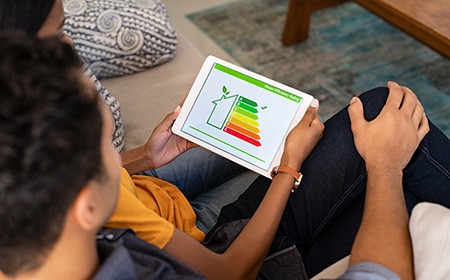
Unless they have an exemption, landlords can only let out properties to new tenants that have an Energy Performance Certificate (EPC) rating of E or higher. That's because of something called the Domestic Minimum Energy Efficiency Standard (MEES).
If your landlord is not able to share it with you, it might be a sign that this might not be the place. Our simple EPC certificate guide will show you how EPCs work.
Flat-hunting, energy saving checklist
-
01
Look for signs of damp. When viewing a property, keep your eyes peeled for the tell-tale signs of a damp – smell, mould and condensation. A damp property is harder to heat and could have a significant impact on your wellbeing.
-
02
Energy-efficient appliances. Appliances have a rating from A (most efficient) to G (least efficient). The more efficient the appliance, the less it will cost you to run (unless you forget to turn it off).
-
03
Gas or electric? Check if the house is heated with gas or electricity or both, and ask the current tenants (if possible) how they find the heating. Heating is important to avoid problems of damp and keeping things comfortable.
-
04
Insulated windows, walls and roof. Good double glazing will help make a flat more energy-efficient, and could make it easier and cheaper to heat. Also check the EPC certificate or ask the landlord what insulation there is in the property.
-
05
Water tanks, pipes and radiators. Make sure these are well insulated, it will help reduce the amount of heat lost and could save you money on your energy bills.
More home energy ideas
Related articles

Visit our Home Energy Hub
See our zero cost energy saving tips and get a free Home Energy Plan for your home (even if you're renting).