

We've surveyed 10,000 people in the UK to uncover the latest household savings trends
Overlay

Average savings in the UK
NatWest Savings Index 2026
Savings trends at a glance
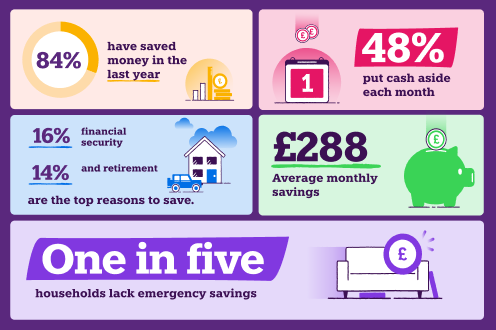
£288
Average monthly savings in the UK
£5,776
Average emergency fund
55%
People setting a budget
30%
People who never dip into savings – up from 10%
Round Ups is available to customers with an eligible current account, instant access savings account and the mobile app. Once you’ve set it up, it’ll automatically work with all debit card and contactless device payments (in sterling). App available to customers aged 11+ with compatible iOS and Android devices and a UK or international mobile number in specific countries.
Read our Savings Index in full
Take a deeper dive into our 2026 Savings Index. Our full report has extra facts and figures on the UK’s savings habits.

18-34
- Younger adults tend to save less than older age groups each month. Although average monthly savings for 18-24 year-olds have gone up slightly, from £195.48 to £202.30.
- They’re also more likely to dip into their savings – 5% of 18-24s do this daily, with 25% warning of a negative mental impact.
- The good news is they’re keen on budgeting, with 25-34s particularly focused on getting their finances in order (69%).
- Many are open to investing, with over half (53%) of 18-24s considering this in the next two years.
- A third (33%) of adults between 18 and 24 use TikTok for financial support, showing how popular digital tools and social media apps have become.
Information Message

35-54
- The UK’s over-35s try to balance safety and risk when managing their savings.
- Two thirds (66%) have set a budget, with 88% of 35-44s setting specific savings goals too.
- These savers have some interest in investing their money. In particular, those aged 35-44 (38%).
Information Message

55+
- Older adults are the least likely to dip into their savings accounts. More than a third (39%) of over-65s have avoided doing so in the last year.
- They also have the highest ISA savings average by age, with over-65s putting £6,315.90 away each year.
- On the other hand, they’re less likely to use budgeting tools. Just 42% of over-65s budget their finances, compared to the national average of 55%.
- Investing isn’t a big priority for this age group either. Just 5% of over-65s plan to invest in the next two years, compared to the average of 27%.
- If handed an £8,000 lump sum, 54% of over-65s would put it all in a savings account instead of investing any.
Information Message

Parents
- Parents with kids under 18 tend to be more active savers, with clearer financial goals.
- 14% of these parents take steps to save every week.
- 53% of parents are considering investing to help them save.
- Those with younger kids are also more likely to invest in the next two years (42%), compared to parents with children over 18 (11%).
Information Message
London has taken the crown this year as the UK’s leading city for confident saving. Belfast, Coventry and Birmingham follow closely behind.
Want to know how your nearest city performed? Just use the dropdown below. The higher the score, the more informed and confident the savers who live there are.
To get our results, we looked at average yearly savings as a percentage of income in each city we surveyed. We also researched savings habits by city, taking an average percentage of how people answered these questions:
- How often do you put money into savings?
- How important or unimportant do you think saving money is for your financial goals?
- Do you set a budget for yourself?
- What kind of savings goals do you have?
- How much do you think you should be saving each month?
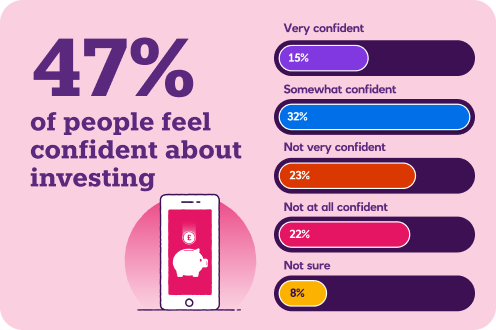
Over longer periods of time (five years or more), investments such as stocks, shares and funds have the potential to give you higher returns compared to cash savings. But the value of investments can fall as well as rise. Eligibility criteria, fees and charges apply.
Start your savings journey
Boost your savings knowledge with our range of handy guides and resources. From savings accounts to budgeting tools, we offer plenty of support.




App available to customers aged 11+ with compatible iOS and Android devices and a UK or international mobile number in specific countries. Round Ups is available to customers with an eligible current account, instant access savings account and the mobile app. Once you’ve set it up, it’ll automatically work with all debit card and contactless device payments (in sterling).